Houseplants are often the most fragile items you own, and unfortunately, professional movers will almost never transport them. Because plants are living things, they are subject to strict agricultural regulations across state lines and are highly susceptible to the extreme temperatures inside a moving truck.
Three Weeks Before: The Prep
Stop repotting your plants. Repotting causes stress, and you want your plants as resilient as possible for the journey. Instead, prune dead leaves and branches so the plant is compact and healthy.
If you are moving across state lines, check the USDA regulations for your destination state. Some states (like California and Florida) have strict bans on bringing in certain species to prevent the spread of agricultural pests.
Two Days Before: Water Strategically
Give your plants their normal watering two to three days before moving day. You want the soil to be moist enough to sustain them, but not soaking wet. A heavily watered pot is significantly heavier and prone to making a muddy mess in your car.
Moving Day: Packing and Transport
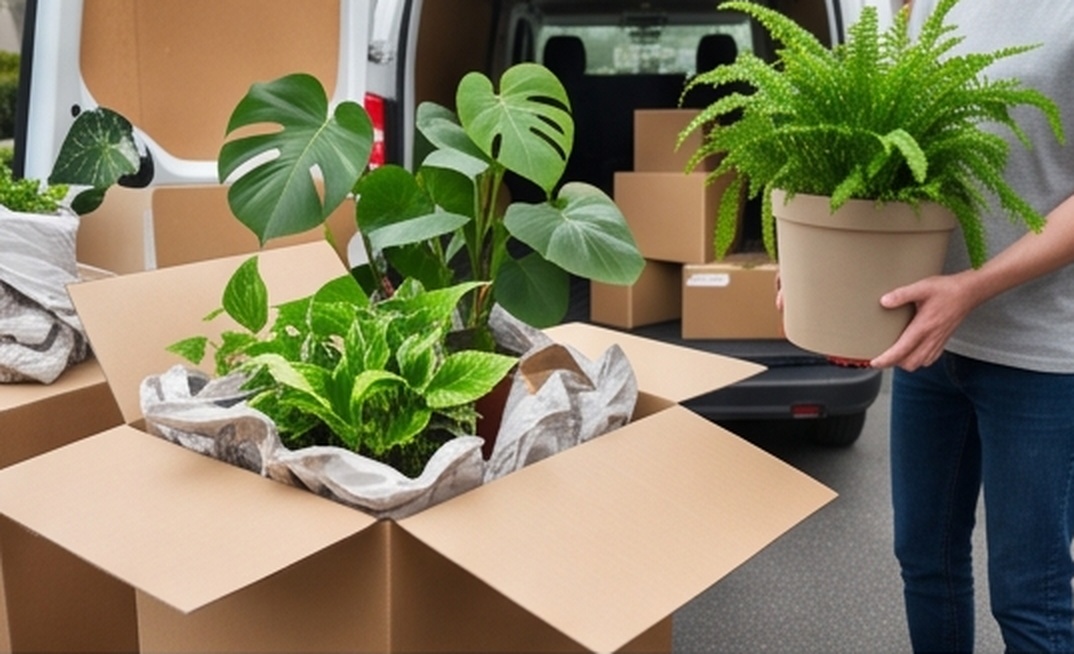
For smaller plants, place them inside sturdy cardboard boxes. Use crumpled paper to fill the empty space around the pots so they don't slide around. Leave the top of the box open so the plants can breathe and receive sunlight.
For large, tall plants (like Ficus trees or monsteras), wrap the entire plant gently in a bedsheet to prevent the branches from snapping. Transport them in the backseat or trunk of your personal vehicle—never in a moving truck where temperatures can reach 140 degrees.
Unpacking: The Recovery Period
As soon as you arrive, get your plants out of the car. Place them in their new spots and give them a few days to adjust to the new lighting and humidity conditions before you give them a heavy watering.