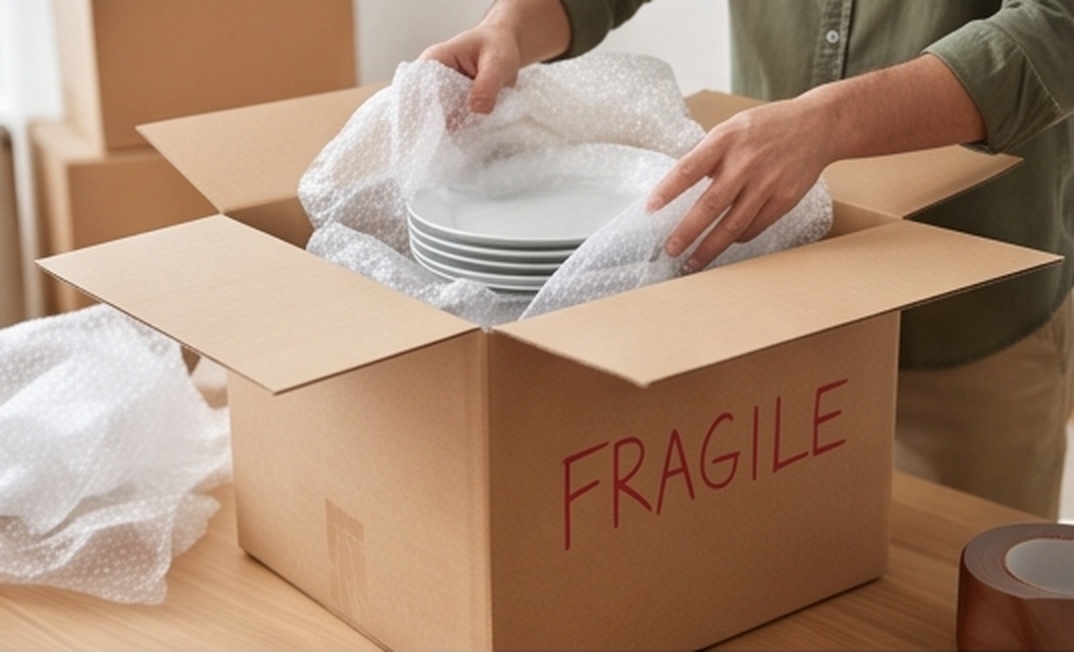
There is nothing more heartbreaking during a move than unwrapping a beloved heirloom or your favorite coffee mug only to find it in pieces. Packing fragile items requires more than just tossing them in a box with some crumpled newspaper. Professional packers use specific techniques to ensure fragile goods survive the journey.
The Golden Rule: No Empty Space
The primary cause of breakage isn't dropping the box; it's the items shifting and colliding inside the box during transit. A properly packed box of fragile items should have absolutely no empty space.
Packing Dishes and Plates
Never pack plates flat! If a box is dropped, flat plates will shatter under the pressure.
- Wrap each plate individually in packing paper (not newspaper, which can leave ink stains).
- Stack the plates vertically on their edges, like records in a crate.
- Place a thick layer of crushed paper at the bottom of the box before inserting the plates.
- Fill all gaps on the sides and top with more crushed paper before sealing.
Packing Glasses and Stemware
Always use a specialized dish-pack box for stemware; these boxes have double-corrugated walls for extra protection.
- Stuff the inside of the glass with a piece of crumpled packing paper.
- Roll the glass in two sheets of packing paper, tucking the ends in as you go.
- Place the heaviest glasses at the bottom of the box, and the most delicate stemware at the top.
- Consider using cardboard dividers (cell packs) to keep glasses completely separated.
The Shake Test
Before sealing any box containing fragile items, give it a gentle shake. If you hear or feel anything shifting inside, open it back up and add more packing paper. The box should feel completely solid.