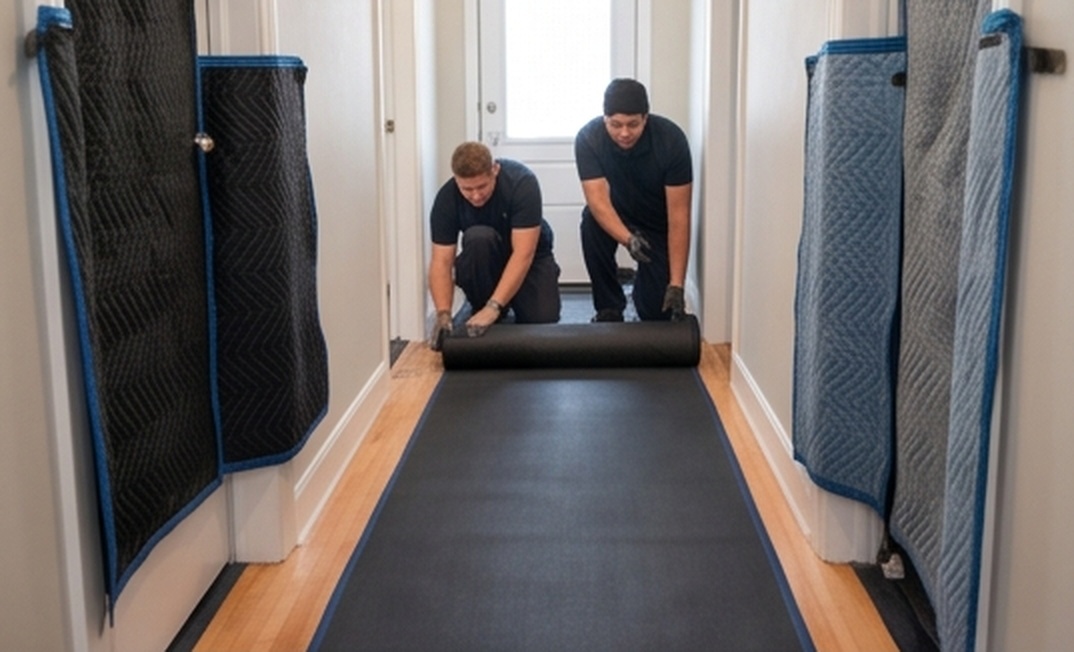
Moving day is a chaotic dance of heavy furniture, metal dollies, and hurried footsteps. Without proper precautions, this dance can easily result in scratched hardwood floors, gouged drywall, and ruined carpets—costing you your security deposit or lowering the value of the home you just sold.
Protecting Hardwood and Tile Floors
Never drag furniture across hardwood floors. Even soft wood legs can leave deep gouges.
- Use Ram Board or Masonite: For heavy traffic paths (like the main hallway to the front door), lay down Ram Board or thin sheets of Masonite. This provides heavy-duty protection against dropped items and dolly wheels.
- Felt Pads and Furniture Sliders: Attach thick felt pads to the bottom of all heavy furniture before moving them. If you must slide something, use specialized furniture sliders designed for hard surfaces.
Protecting Carpets
Carpet protection film is your best friend. This self-adhesive plastic film rolls out over your carpets, protecting them from muddy work boots and accidental spills. It peels up easily without leaving a residue. Avoid using regular plastic tarps, as they pose a major slipping hazard.
Safeguarding Walls and Corners
Corners take the brunt of the damage during a move, as people try to pivot large sofas and mattresses through narrow hallways.
- Corner Guards: Purchase inexpensive cardboard or plastic corner guards and tape them to the high-traffic corners of your home using painter's tape.
- Wrap the Furniture, Not Just the House: A heavily padded piece of furniture is much less likely to damage a wall if it bumps into it. Wrap all dressers, tables, and bed frames in thick moving blankets before they ever leave the room.